- Routine wellness exams
- Puppy and kitten care
- Sick Pet Exams
- Internal Medicine
Call/text 317-771-1952
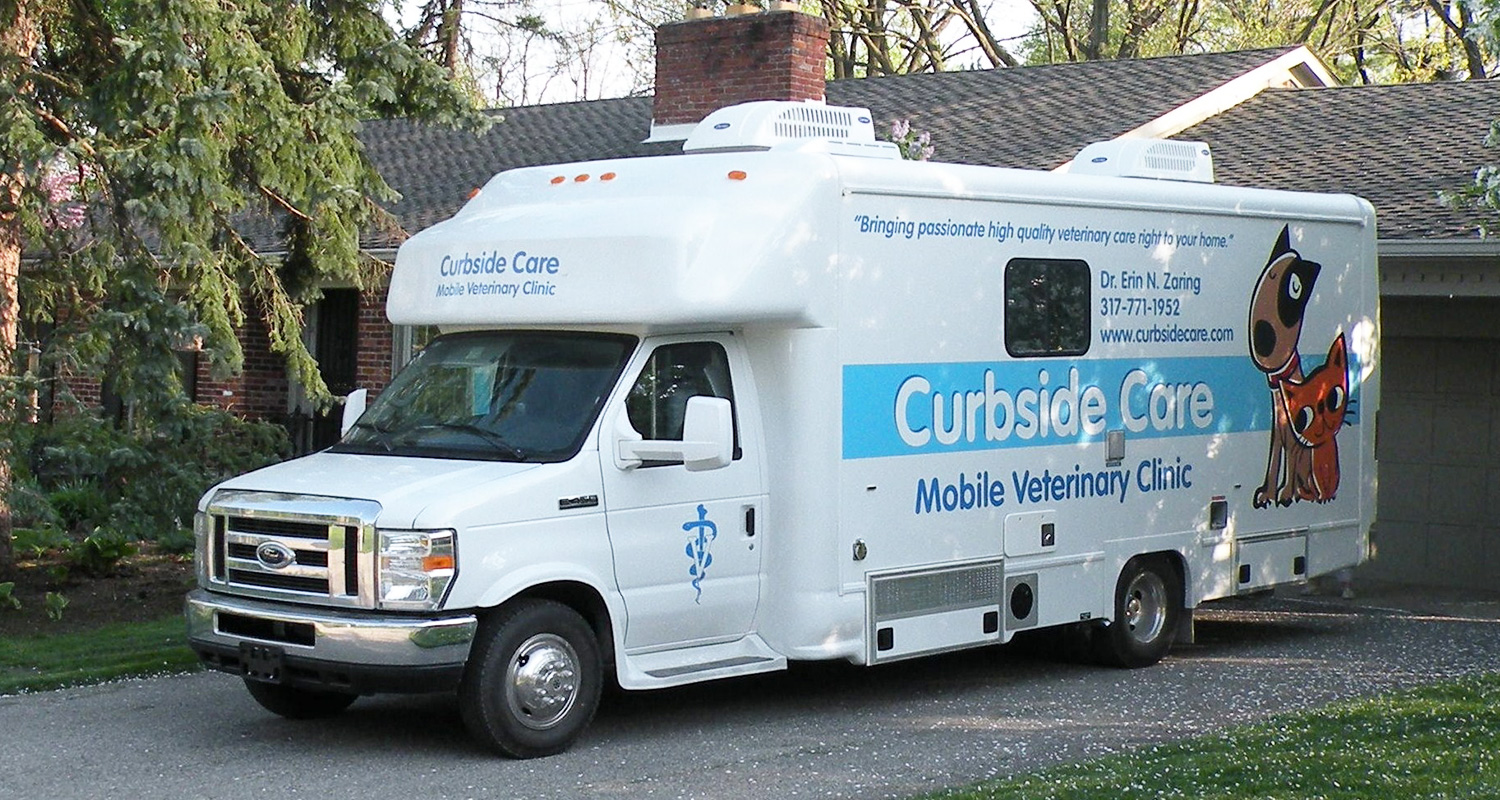
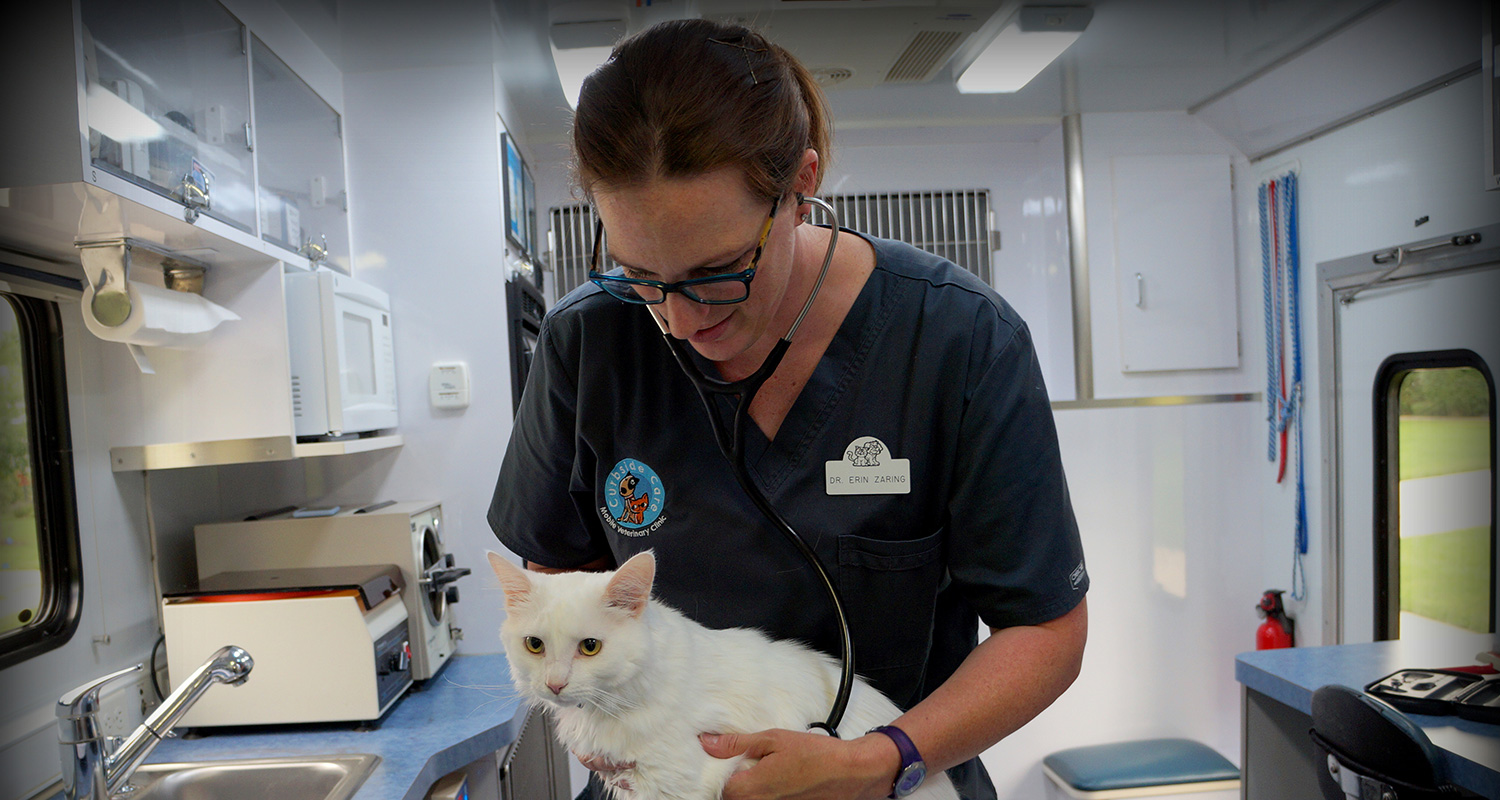
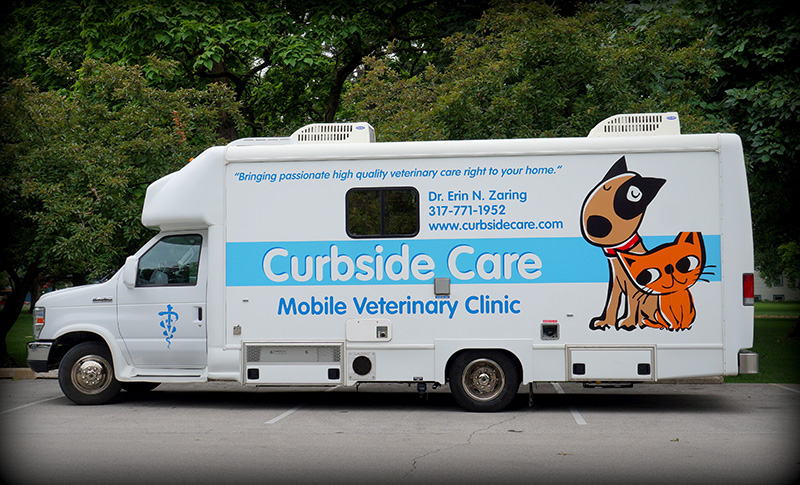
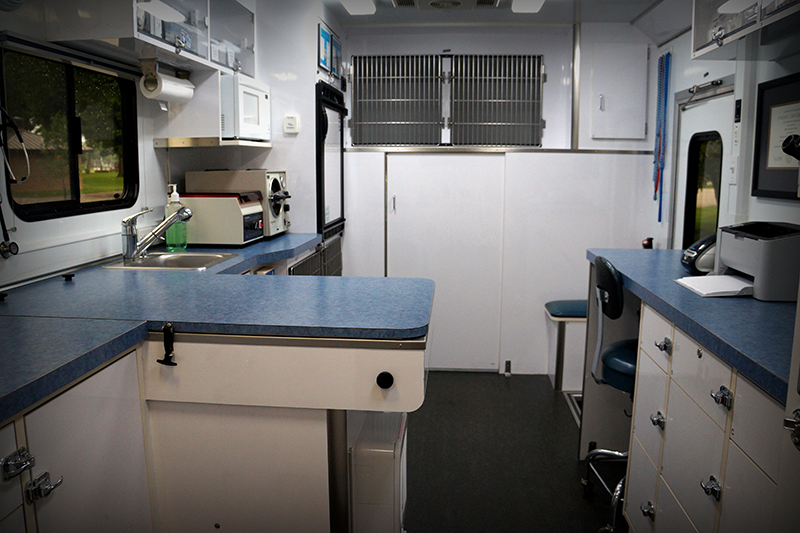
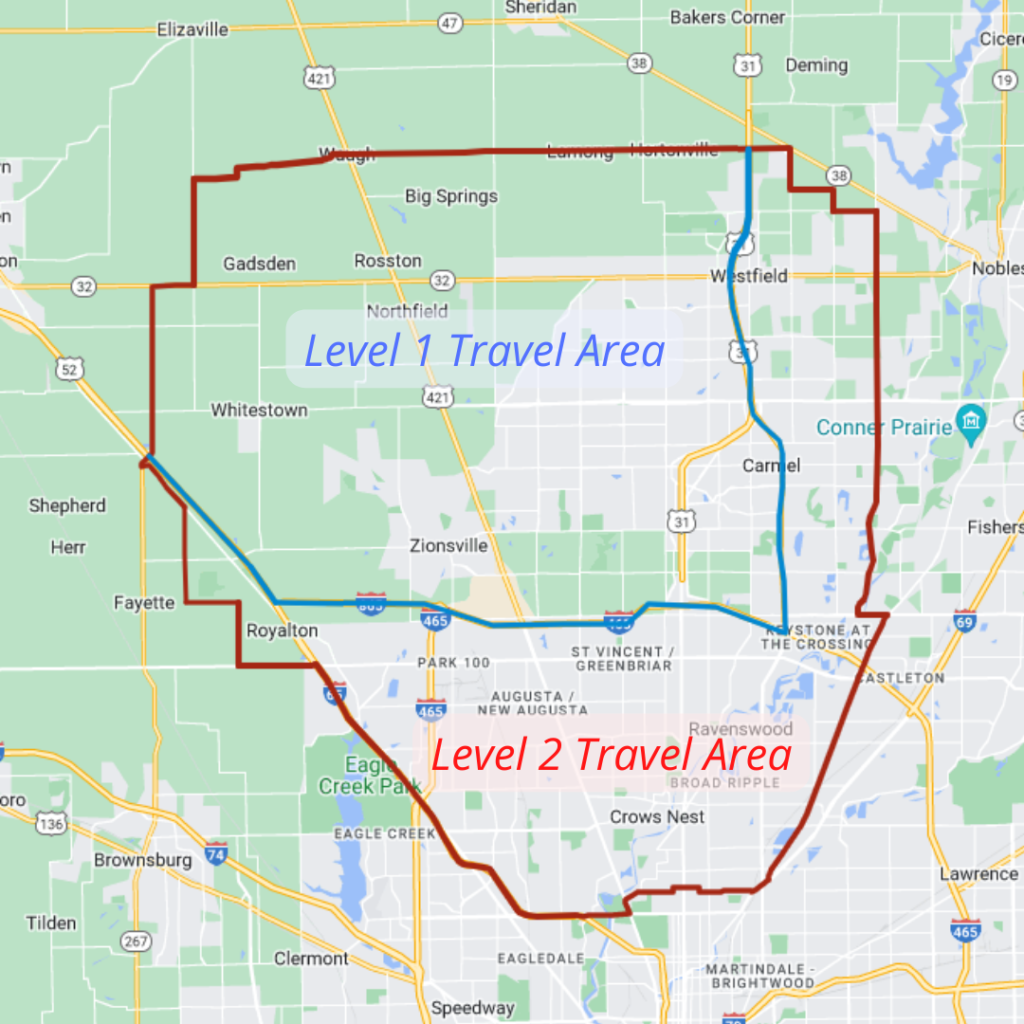
Curbside Care is a full-service mobile veterinary clinic providing high quality medical and surgical care for dogs and cats in and around the north side of Indianapolis. Traveling in our custom built state of the art hospital on wheels, we bring the veterinarian to you!
- Surgical procedures
- Dentistry
- Digital x-ray
- Behavioral consultation
Why Mobile?
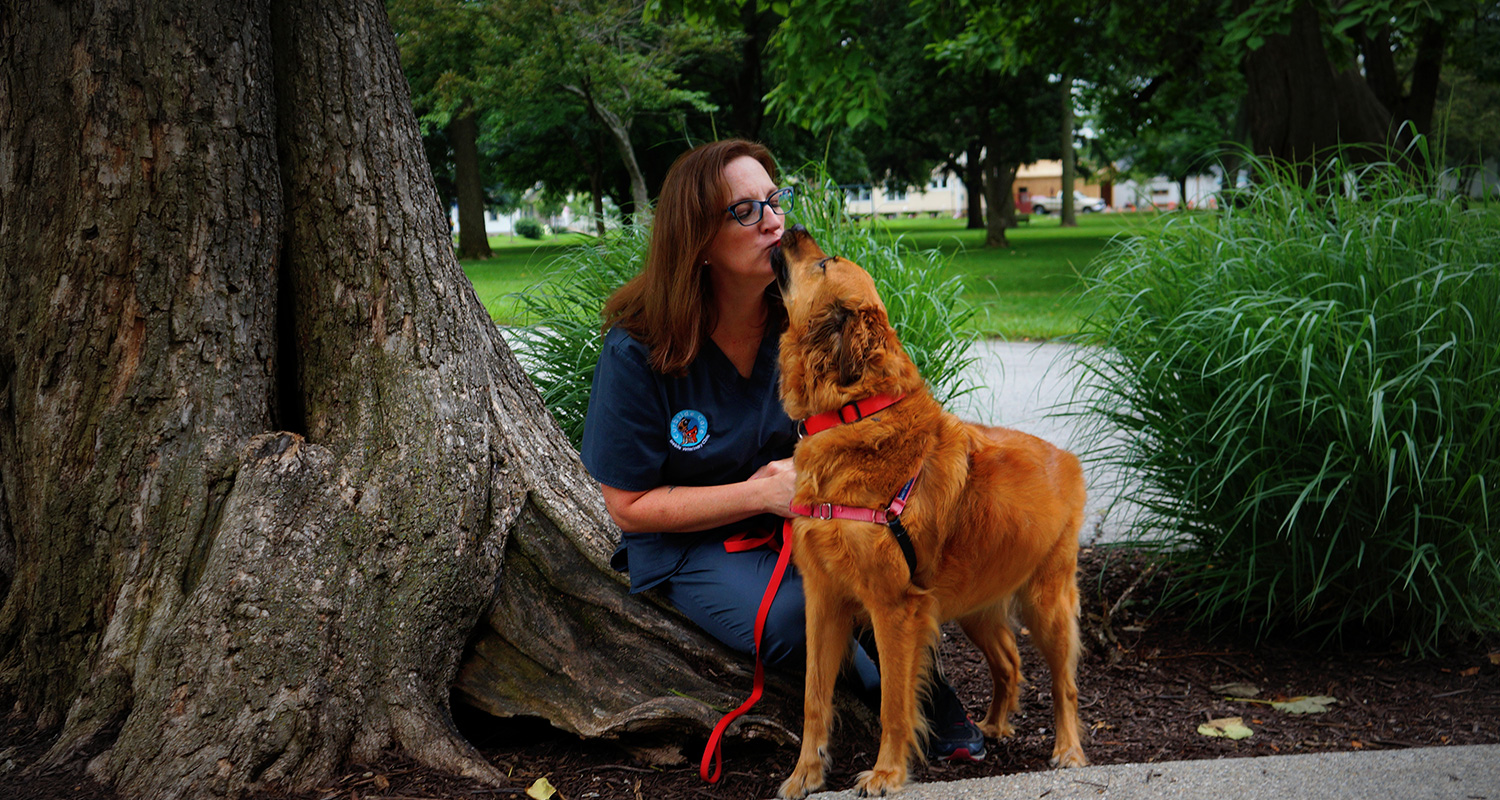
There are many benefits to having your pet cared for by Curbside Care Mobile Veterinary Clinic. Your pet will not have to be around unfamiliar animals that may frighten them and could expose them to sickness. Eliminate the car ride that often is very stressful and, in some cases, may cause an upset stomach. In addition to improving your pet’s vet experience, you will save time and gas money. We schedule more time for exams than most stationary clinics, therefore we can move more slowly with your pet, reducing their stress. Longer exam times allow us to take a more complete history from you (you know your pet best!), and our doctor can perform a more thorough exam. Patient stress can alter basic vital signs such as pulse rate, respiratory rate, blood pressure, and temperature, limit the veterinarian’s exam, and even change laboratory test results. Relaxed pets benefit from better vet care.
Forms and Online Pharmacy
Pet Emergency Information
If your pet is having an emergency please contact MedVet Medical & Cancer Center
Reviews and Social Media
Read reviews of our mobile clinic and connect with us on social media
Curbside Care
Mobile Veterinary Clinic
Call/text (317) 771-1952
Hours of Operation
Monday: 8 am-5 pm
Tuesday: 8 am-5 pm
Wednesday: Closed
Thursday: 8 am-5 pm
Friday: 8 am-5 pm
Saturday and Sunday: Closed